
Summary
The choice of appropriate fixation material depends on factors such as the body part, skin condition, size and type of wound dressing, as well as the desired level of mobility. Elastic fixation bandages can mechanically secure wound dressings without the need for extensive adhesive application to the skin. Cohesive fixation bandages adhere primarily to themselves and are particularly suitable for securing dressings on joints. Self-adhesive fixation non-wovens allow for full-surface fixation, for example with larger wound dressings. Silicone-coated fixation non-wovens are available for sensitive or fragile skin. [4, 6] Tubular bandages such as Stülpa rolls provide a non-adhesive alternative and are available in various sizes for different body regions. [5]
Which fixation is suitable for which dressing?
| Dressing / Situation | Suitable fixation material | Why? |
|---|---|---|
| Gauze or non-woven compress on arm/leg | Elastic fixation bandage | Mechanical fixation of the wound dressing; there is no need to apply adhesive over a large area of the skin. [1] |
| Dressing on elbow, knee, or conical body part | Cohesive elastic fixation bandage | The layers of the bandage adhere to one another. According to the manufacturer, Elastomull haft color is specifically intended for securing wound dressings on joints. [2] |
| Large wound dressing on back, abdomen, or thigh | Wide fixation non-woven | Allows for full-surface fixation of non-adhesive wound dressings and is specifically intended for larger areas. [3] |
| Sensitive or fragile skin | Silicone fixation non-woven | Omnifix silicone is specifically designed for sensitive or fragile skin and for the gentle fixation of non-adhesive wound dressings. [4] |
| Finger, hand, foot, or torso without adhesive | Tubular bandage | Non-adhesive fixation; the appropriate size is chosen based on the body region. [5] |
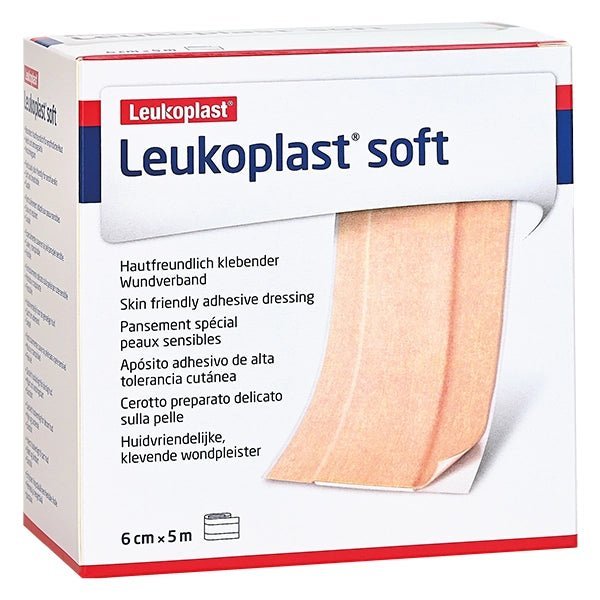
| Small compress / short dressing | Adhesive tape roll | Targeted adhesive fixation. The specific adhesive tape roll should be selected based on skin type and the intended application. [6] |
Fixation bandage, cohesive bandage, or fixation non-woven? What is the difference?
An elastic fixation bandage such as Servomull Elast is wrapped around the body part and serves to mechanically secure wound dressings. According to the manufacturer or product information, the bandage is elastic and approximately 110% stretchable. [1]
Cohesive bandages such as Elastomull Haft are coated with a synthetic polymer, causing individual layers to adhere to each other. The manufacturer explicitly mentions securing wound dressings on joints and the fixation of cast splints as areas of application. [2]
A self-adhesive fixation non-woven like Omnifix elastic is applied to intact skin around or over a non-adhesive wound dressing. HARTMANN recommends it especially for full-surface fixation and covering larger areas. [3]
For sensitive or fragile skin, a silicone-coated fixation non-woven like Omnifix silicone can be an option. HARTMANN describes it as a skin-friendly fixation non-woven for the gentle and secure fixation of wound dressings and explicitly names sensitive or fragile skin as a field of application. [4]
Product comparison: Fixation material by customer benefit
| Product | Type | Main features & areas of application | Price |
|---|---|---|---|
| Servomull Elast | Elastic fixation bandage, approx. 110% stretchable | Elastic fixation bandage for non-slip and breathable dressings. [1] | €25.59 / 20 pcs.* |
| Elastomull Haft Color | Cohesive elastic fixation bandage | Securing wound dressings, especially on joints; layers adhere to each other. [2] | €52.60 / 10 pcs. (6 cm × 4 m, blue)* |
| Omnifix Elastic | Wide fixation material | Full-surface fixation of non-adhesive wound dressings, especially on larger areas. [3] | from €12.80 / roll* |
| Omnifix silicone | Silicone fixation non-woven | Fixation of non-adhesive wound dressings, especially for sensitive or fragile skin. [4] | €28.59* / 10 cm × 2 m |
| Leukoplast adhesive tape | Strong adhesive tape | Securing dressings; for normally sensitive skin and situations requiring particularly secure adhesion. [6] | €102.59 / 24 pcs.* |
| Stülpa ready-made dressings – Size 1 for fingers | Tubular bandage (finger) | Non-adhesive fixation dressings; depending on the size, suitable for fingers, hand, foot, leg, and torso, among others. [5] | from €31.65* |
* Prices and availability last updated: 15.09.2026; changes possible at any time [7].
Which fixation is useful for sensitive skin?
For sensitive or fragile skin, the choice of fixation material should be specifically tailored to skin compatibility and the intended use. According to HARTMANN, Omnifix silicone is intended for securing primary dressings or non-adhesive wound dressings and is explicitly described for sensitive and fragile skin. [4] If an adhesive-free fixation is required, a suitable tubular bandage like Stülpa can be used, depending on the body region. [5]
What should be kept in mind during application?
Fixation material should hold the wound dressing in the intended position without unnecessarily compromising the respective treatment. The selection depends, among other factors, on the body region, skin condition, wound dressing, and the manufacturer's specifications for the product used. For adhesive fixation materials, skin condition, product suitability, and manufacturer instructions must be taken into account. Conventional adhesive tapes and fixation non-wovens are used according to their respective indications. Specially designed products are available for sensitive or pre-damaged skin, such as silicone-coated fixation non-wovens. [4, 6]
Conclusion: The most important selection criteria at a glance
Different material groups are available for securing compresses and other non-adhesive wound dressings. Elastic fixation bandages allow for mechanical fixation. Cohesive fixation bandages such as Elastomull haft color are intended particularly for use on joints, as the individual layers adhere to each other. [1, 2]
For larger areas, a self-adhesive fixation non-woven such as Omnifix elastic can be used. For sensitive or fragile skin, Omnifix silicone is specifically intended for the gentle fixation of non-adhesive wound dressings. Tubular bandages like Stülpa offer a non-adhesive alternative and are available in various sizes for different body regions. Adhesive tape rolls such as Leukoplast serve for adhesive fixation; here, the selection should be adapted to the skin type and application case. [3–6]
Sources
[1] servoprax GmbH: Servomull Elast – elastic fixation bandage. Product information on material, elasticity, and application. Last access: 22.09.2026.
[2] Essity Germany GmbH: Elastomull® haft color. Manufacturer information on cohesive elastic fixation bandage, material, and areas of application, particularly for securing wound dressings on joints. Last access: 22.09.2026.
[3] PAUL HARTMANN AG: Omnifix® elastic. Manufacturer information on self-adhesive fixation non-woven for full-surface fixation of non-adhesive wound dressings, especially on larger areas. Last access: 22.09.2026.
[4] PAUL HARTMANN AG: Omnifix® silicone. Manufacturer information on silicone-coated fixation non-woven for the fixation of non-adhesive wound dressings, especially for sensitive and fragile skin. Last access: 22.09.2026.
[5] PAUL HARTMANN AG: Stülpa® Rolls. Manufacturer information on seamless knitted tubular bandage, application areas, and size allocation. Last access: 22.09.2026.
[6] Essity Germany GmbH: Leukoplast®. Manufacturer information on adhesive tape rolls for securing dressings, properties, and suitability for normally sensitive skin. Last access: 22.09.2026.
[7] DocMed GmbH: Product information, product range, prices, and availability of the fixation materials listed in the article on docmed.de. Status of the price and availability data used in the article: 15.09.2026.